Nonviolent Protest Movement
- Nonviolent Protests Today
- Non Violent Protest Civil Rights Movement
- Non Violent Protest Civil Rights Movement
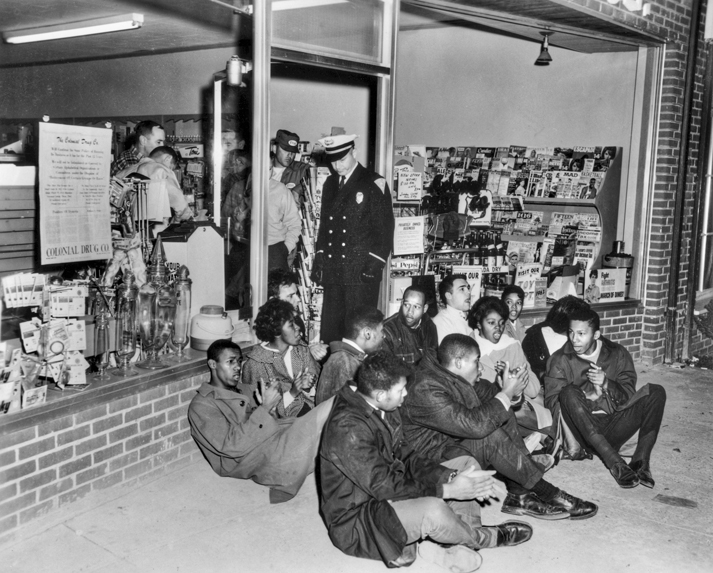
The Evolution of Non-Violence in American Civil Rights. The nonviolence philosophy was introduced into the civil rights movement by activst Dr. Martin Luther King; however, he adopted his philosophy from Indian Independence Activist Mahatma Ghandi. King studied Gandi's approach and applied his beliefs in America's struggle for equal rights. Nonviolent civil disobedience actions have taken place at dozens of nuclear weapons research installations, storage areas, missile silos, test sites, military bases, corporate and government offices and nuclear power plants.
During the transition between the wet to dry season of 1930 Mahatma (Mohandas) Gandhi led a peaceful protest against Britain’s imposed law dictating no Indian could collect or sell salt in the country. Followed by dozens, Gandhi walked over leading protesters to the Arabian Sea to pick up a small handful of salt out of the muddy waters of the sea. Seventeen years later, after this peaceful yet defiant act, India gained independence from Britain. “Nonviolence is an intensely active force when properly understood and used.” – Suffrage Parade. Cesar Chavez advocated for peaceful boycotts, protest, and a grueling yet nonviolent which led to legislative changes to end exploitative abuse of America’s farm workers in the late 1960s. He led a five-year strike in Delano, Calif., bringing together over to demand minimum wage primarily for underpaid overworked Filipino farmworkers. This caused more than to boycott California grapes, which helped secure unions, better wages and security for farmworkers.
Nonviolent Protests Today
“I am convinced that the truest act of courage, the strongest act of humanity, is to sacrifice ourselves for others in a totally non violent struggle for justice.” - Montgomery Bus Boycott. There are times when one person’s peaceful actions can bring about more change than anyone can imagine. Dolby ac3 audio code 8192 format solution for mac. Rosa Parks’ refusal to give up her seat to a white passenger on a bus in Montgomery, Ala., is one such example. Her defiant act symbolized greater civil rights, spreading the message that all people deserve equal seats.
The a year later in 1956, segregation on public buses unconstitutional. “People always say that I didn't give up my seat because I was tired, but that isn't true. I was not tired physically, or no more tired than I usually was at the end of a working day. I was not old, although some people have an image of me as being old then.
I was forty-two. No, the only tired I was, was tired of giving in.” — Singing Revolution The Tallinn Song Festival Grounds where the Singing Revolution took place still bring people together for music and change. Image: Music and social activism have long been “partners in nonviolent crime.” During the Singing Revolution, Estonia literally sang its way out of the rule under the Soviet Union. In 1988, more than gathered for five nights to protest Soviet rule.
Non Violent Protest Civil Rights Movement
This was known as the Singing Revolution. For Estonians, while the small but fierce country held it’s own during invasion from Germany, Sweden, Denmark and others. In 1991, after decades of Soviet rule, a country with just regained it’s independence. “Land of my fathers, land that I love / I’ve given my heart to her / I sing to you, my supreme happiness / My flourishing Estonia!” - lyrics from Share these example of change as a reminder that peaceful protests work.
Non Violent Protest Civil Rights Movement
Real political, social change stems from acts of nonviolence. While media bombards us with stories of bloodshed, the true spotlight should be on those standing together today asking for equality for all. What do Global Citizens do?
They #shOwup. Regardless of where you're from, what you do for a living, or what your background is: We all #shOwup for something. And letting them explain why they #shOwup every day. Please join the movement and show and tell us why you #shOwup on Facebook, Twitter, and/or Instagram! Did we mention our hashtag, #shOwup?;) Be sure to use it and tag.